
Introduction
Many buildings use glass to provide daylight, views and environmental protection.
At Castle Residences, glass plays a much larger role.
It helps define the identity of the building itself.
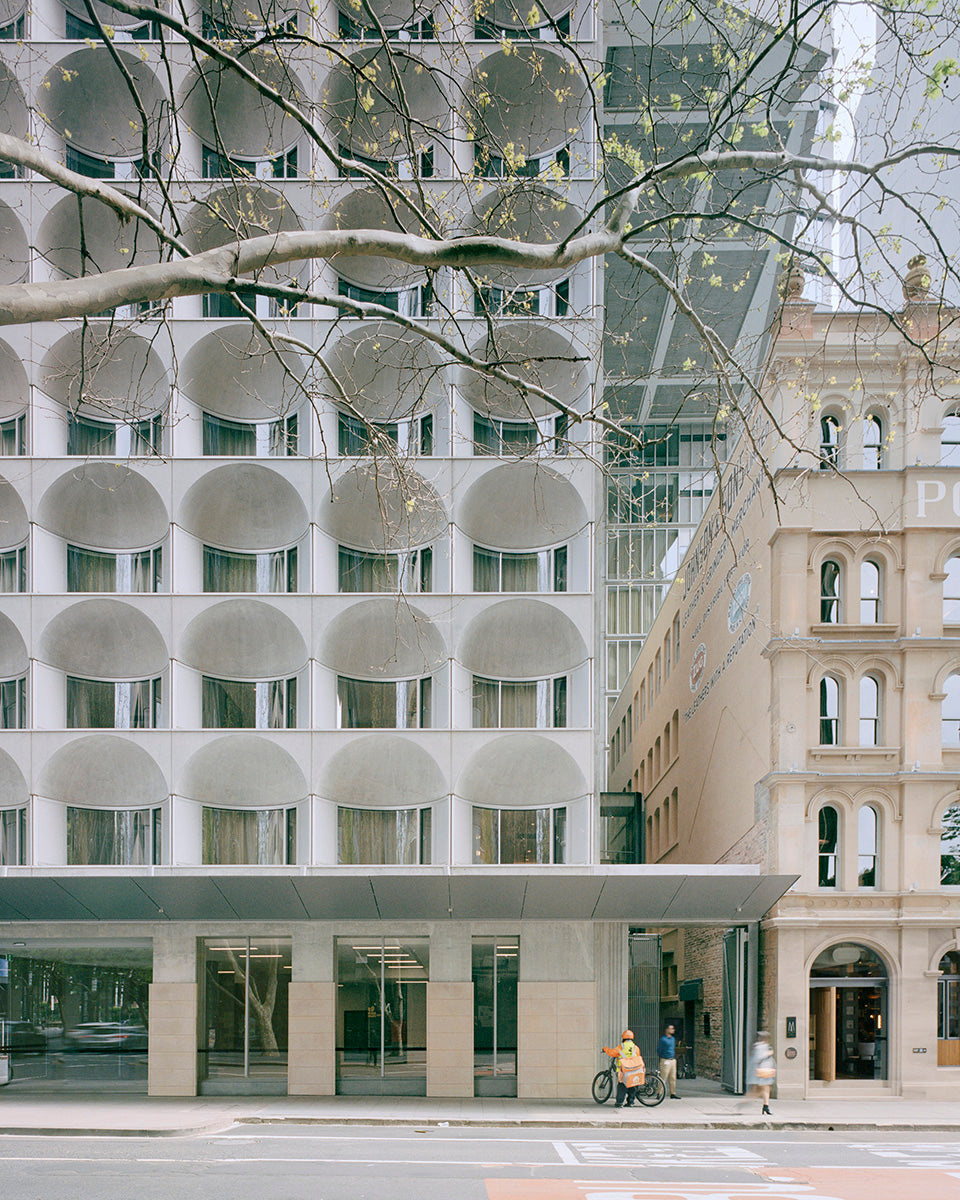
Designed by Candalepas Associates, constructed by Hutchinson Builders and delivered with façade contractor G James, Castle Residences rises above the heritage-listed Porter House building through a carefully sculpted form that has become one of Sydney's most recognisable contemporary residential towers.
The project demonstrates how low-e glass can contribute not only to building performance, but also to the emotional and spatial experience of architecture.


Beyond the Conventional Glass Tower
Many residential towers rely on repetitive façades and uniform glazing.
Castle Residences takes a different approach.
The building incorporates elegant arched glazing and a series of concave window forms that create rhythm, depth and variation across the façade.
The arches soften the building's vertical expression, giving the tower a refined and timeless quality that feels more crafted than manufactured.
At the same time, the concave glazing introduces shadow, depth and movement across the façade, allowing the building to change character as light conditions evolve throughout the day.
How Curved and Concave Glass Changes the Experience
The impact of the façade extends beyond its appearance.
The concave glazing also changes how occupants experience the city.
Traditional flat glazing creates a relatively fixed relationship between interior and exterior space.
The concave forms at Castle Residences create something different.
Views feel wider and more immersive. Light enters from multiple angles. Reflections shift throughout the day.
Rather than simply looking through a window, occupants experience a façade that actively shapes their connection with the surrounding urban environment.
For a luxury residential development, these subtle experiential qualities become just as important as performance metrics.

Glass Selection
Plati Shade 39-1 on Clear
Plati Shade 39-1 was selected for its distinctive silver-blue appearance and strong solar control characteristics.
- Refined silver-blue aesthetic
- Strong solar control performance
- Premium architectural expression
- Subtle visual depth under changing light conditions
Super S1 on Clear
Within the curved and concave glazing elements, Super S1 was selected for its exceptional neutrality and high visible light transmission.
- Exceptional neutrality
- High visible light transmission
- Suitable for curved façade elements
- Helps preserve architectural design intent

Preserving Architectural Intent
Projects such as Castle Residences highlight an important principle in façade engineering.
A façade can meet every technical requirement and still fall short if it fails to achieve the architect's intended visual outcome.
Curved and flat glass interact with light differently.
Coatings can appear lighter, darker or more reflective depending on geometry and viewing angle.
For this reason, successful outcomes require more than manufacturing capability.
Through sample reviews, mock-up evaluation and coordination between Candalepas Associates, Hutchinson Builders, G James and ASG, glazing decisions were assessed long before fabrication commenced.
The objective was simple: ensure the completed façade looked as good in reality as it did on paper.
Project Reflection
Castle Residences demonstrates how low-e glass can become an integral part of architecture rather than simply a building material.
Through the combination of elegant arched glazing, concave window forms and carefully selected low-e glass products, the façade contributes directly to the character, experience and identity of the building.
For architects and façade consultants, the project serves as a reminder that successful glazing is about more than performance.
It is about shaping how buildings are perceived, experienced and remembered.
Share:
Curved Glass, Colour Consistency and Architectural Intent